Just a moment...
Just a moment...
Just a moment...
/*Responsive Media Queries Max 320px */ @media screen and (max-width: 320px) { .sed { width: 38px !important; height: 38px !important; font-size: 22px !important; line-height: 44px !important; } ul.mega-menulist li { padding: 4px 8px !important; } .td-txt .col-xs-7 { width: 78%; } #Course p.slider-cont.blue { font-size: 13px !important; } .mobilescreen span.cont { font-size: 15px !important; } .cert { font-size: 17px !important; padding-left: 0px; } .getcall-box button.buttonctadarkbtn.btn.btn-lg { width: 86% !important; } .callto { width: 48% !important; top: 16px !important; } nav.navbar .navbar-brand { left: -68px !important; top: 10px !important; } nav.navbar .navbar-brand img.logo { width: 60px !important; } .rgt-icon p.cont2.mb0 { line-height: 48px; font-size: 14px; } .jobsare p.slider-text.white { font-size: 33px !important; } .whtlogo { margin: 70px 0 5px -26px; } .half img { width: 274px; margin: 0 auto 10px auto; } .counter .col-xs-10, .counter .col-xs-9 { padding-left: 8px !important; } .headbutton { font-size: 10px !important; width: 154px !important; } .headbutton1 { font-size: 10px; } .select2-container { margin-right: 2px !important; } nav.navbar.bootsnav { margin-bottom: 0; -moz-border-radius: 0px; -webkit-border-radius: 0px; -o-border-radius: 0px; border-radius: 0px; background-color: #fff !important; border: none; border-bottom: solid 1px #e0e0e0; z-index: 9; } .modal-content { -webkit-box-shadow: 0 5px 15px rgba(0, 0, 0, 0.5); background-image: -webkit-gradient( linear, left top, right bottom, from(#02b3e4), to(#02ccba) ); background-image: linear-gradient(to bottom right, #02b3e4, #02ccba); box-shadow: 0 5px 15px rgba(0, 0, 0, 0.5); } .modal-header { border-bottom: none; color: #fff; padding-bottom: 0px; } .modal-title { color: #fff; } } /*Responsive Media Queries Max 480px */ @media screen and (max-width: 480px) { /*Blogs*/ .blogttl { font-size: 15px; padding: 10px; box-shadow: 0 5px 20px 2px rgba(0, 0, 0, 0.12); font-weight: bold; margin-bottom: 10px; } .rght.sticky { display: none; } .blogdtlright h2 { font-size: 1.2em; font-weight: 700; line-height: 26px; margin-top: 20px; margin-bottom: 8px; } .crsbox2 { box-shadow: 0 5px 20px 2px rgba(0, 0, 0, 0.12); margin-bottom: 12px; } .crsbox2 p { position: absolute; bottom: 0; right: 12%; color: #fff; font-size: 18px; text-align: center; } /*Blogs*/ /**** JT Css *****/ nav#heder { z-index: 111111 !important; } nav.navbar.bootsnav.no-full .navbar-collapse { max-height: 227px; } .navbar-brand { float: left; height: 46px !important; } nav#heder { position: fixed !important; } .btn-store, .btn-store2 { font-size: 11px !important; line-height: 15px; width: 86px; text-align: center; padding: 3px 0px !important; } .cert { font-size: 21px; padding-left: 0px; } .select2-container { margin-right: 9px; } .mobilescreen span.cont { color: #fff; font-size: 17px; margin-bottom: 16px; display: block; } .mobilescreen button { border: 2px solid #ffffff !important; color: #fff !important; } .mobilescreen button a.dark.notxtdec { color: #fff !important; } .modal-body { position: relative; padding: 6px; } #myModal3 .modal-dialog, #myModal4 .modal-dialog, #myModal5 .modal-dialog, #myModal6 .modal-dialog { width: 100% !important; top: -20px !important; } #myModal3 .modal-content, #myModal4 .modal-content, #myModal5 .modal-content, #myModal6 .modal-content { width: 96% !important; margin: 0 auto; float: none !important; } #myModal .modal-content { width: 98% !important; background: url(https://www.janbasktraining.com/assets/demo2019/img/popup-mob.webp) top center !important; background-size: cover !important; background-repeat: no-repeat !important; padding-bottom: 61px; } #myModal .modal-dialog { width: 92% !important; } #myModal2 .modal-dialog { width: 92% !important; } #myModal2 .modal-content { width: 98% !important; background: url(https://www.janbasktraining.com/assets/demo2019//img/popup-bg3.webp) top center !important; background-size: cover !important; background-repeat: no-repeat !important; } div#myModal2 .modal-body { padding-top: 144px; } nav.navbar { padding-top: 0px !important; } nav.navbar .navbar-brand { left: -80px; top: 8px; } nav.navbar.bootsnav ul.nav > li > a { padding: 10px 15px; font-size: 15px; border-bottom: 1px solid #eee !important; } ul.phone-strip { width: 64%; background: #fff; float: none; margin: 0 auto; } ul.phone-strip li { list-style: none; float: left; padding: 8px 20px; color: #000; display: table; width: 100%; text-align: center; border: 1px solid #ab2927; margin-bottom: 20px; } ul.phone-strip li:nth-child(2) { background: #ab2927; } ul.phone-strip li:nth-child(2) a { color: #fff; } .callto { width: 40%; float: right; position: absolute; right: 0px; top: 21px; } li.signline:after { content: none; } li.mob-btn { display: none; } ul.mega-menulist li { padding: 4px 12px; font-size: 13px; border-bottom: 1px solid #eee; margin-left: -14px; background: #f7f7f7; } ul.dropdown-menu.mega-menu { min-width: 100% !important; left: 0px; transform: none; background: #fff !important; background-size: contain !important; border-bottom: 4px solid #ab2927 !important; float: left !important; position: initial !important; margin: 0 auto !important; } .lead3:after { width: 3px; height: 20px; } p.course:after { width: 3px; height: 20px; } .percentage .counter p.slider-text { font-size: 28px; margin-top: 10px; color: #414a53; } .counter .col-xs-10, .counter .col-xs-9 { padding-left: 0px; } .counter .col-xs-2 { padding-right: 0px; width: 14%; } .counter .col-xs-3 { padding-right: 0px; width: 18%; } .million .counter p.slider-text.white { font-size: 26px; } .counter p.slider-text { font-size: 26px !important; margin-top: 20px !important; } .percentage img { width: 150px; } .whtlogo img { margin-left: 20px; margin-top: 0px; } .instr-bx.inst2 p.cont2.mb0 { text-align: left; padding-left: 20px; } .padding0 { padding-left: 0px; padding-right: 0px; } .container { width: 100% !important; } .mobilescreen p.form-head.mb0 { position: absolute; background: #eeb617; } .dat { font-size: 14px; font-weight: 700; margin-bottom: 0px; } .est { font-size: 10px; margin-bottom: 0px; } .week { margin-bottom: 0px; } .getcall-box button.buttonctadarkbtn.btn.btn-lg { box-shadow: 5px 4px 3px #bbb0b0; width: 61%; margin-top: 20px; font-size: 14px; } .lineon:before { position: absolute; top: 48px; background: #777; width: 1px; height: 110px; right: 14px; content: none; } #Corporate button.buttonctadarkbtn.btn.btn-lg { padding: 6px 10px; font-size: 12px; margin-bottom: 10px; width: 138px; } .still button.buttonctadarkbtn.btn.btn-lg { padding: 6px 10px; font-size: 12px; width: 138px; } .still img { width: 120px; margin: 0 auto; display: table; } .maria img { width: 120px; margin: 0 auto; float: none !important; } .still { width: 100%; text-align: center; } .tab-pane { margin-bottom: 20px; } #accordion3 .panel-title > a { font-size: 14px !important; line-height: 20px; padding: 10px; } #accordion3 .panel.panel-default { border-radius: 0px; } #accordion3 a.collapsed { border-right: 3px solid #ab2927; border-radius: 0px; } #accordion3 a.collapsed { border-right: 3px solid #ab2927; border-radius: 0px; padding: 10px; } #accordion3 .panel.panel-default { border-radius: 0px; margin-bottom: 24px; } div#accordion3:after { background: #ab2927; position: absolute; top: 0px; content: ''; width: 3px; height: 250px; left: 40px; z-index: -1; } .star-rating-review { text-align: left; } li.fb-icon { margin-right: 0px; } div#accordion3 { position: relative; } #Course p.slider-cont.blue { margin-bottom: 20px; } .fullscreen { display: none; } .mobilescreen { display: block; } #accordion2 .panel-body span { font-size: 13px !important; line-height: 18px !important; display: block; } #accordion2 .panel-body { padding: 10px; } i.fa.fa-sort-down.pull-right { font-size: 20px; line-height: 20px; color: #3598c1; } i.fa.fa-sort-down.pull-right { line-height: 14px; } #accordion2 .panel.panel-default { border-radius: 8px; } .faq-acor #accordion1 .panel-heading .panel-title > a { font-size: 13px !important; } .panel-title > a { font-size: 14px !important; line-height: 20px; } .lead3 { font-size: 16px; line-height: 18px; } .lead2 { font-size: 18px; font-weight: 700; } .wehave { margin: 14px 0 0 0px; padding: 14px 22px; } p { margin-bottom: 10px; } .section { padding: 20px 0; } .getcall-box p.cont2.dark { font-size: 13px; text-align: left; } .getcall-box h3.slider-text2.dark { margin-bottom: 4px; } .cont2 { font-size: 15px; line-height: 20px; } .getcall-box h3.slider-text2 { font-size: 16px; padding-left: 14px; } .getcall-box h3.slider-text2:after { width: 3px; height: 20px; } .instr-bx.inst2 { margin-top: 0px; padding-left: 20px; padding-top: 10px; padding-bottom: 10px; } #Course p.course.red { font-size: 18px; padding-left: 14px; text-align: left; line-height: 20px; } div.bhoechie-tab-content { box-shadow: none; padding: 10px 0px; background: #fff; } .bhoechie-tab { background: #fff; box-shadow: 1px 1px 8px 1px #c5bdbd75; padding: 0px 10px; margin-bottom: 40px; } .instr-bx i { float: left; margin-right: 8px; line-height: 24px; display: block; font-size: 14px; color: #ffc107; } .register p.lead3 { font-size: 16px; line-height: 24px; } .tab-bx:after, .register:after { position: fixed; z-index: -1; } .asper { margin: 10px 0px; } .asper p.cont.white.mb0 { margin: 0px 0px; line-height: 18px; } .jobsare p.slider-text.white { font-size: 44px; } .doyou button.buttonctadarkbtn.btn.btn-md { margin-top: 10px; font-size: 13px; } .doyou p { font-size: 18px; line-height: 24px; } .counter { padding: 0px 0px; border-radius: 5px; } .crm, .million { height: auto; padding: 24px 0px; } .million p.slider-text.white { font-size: 22px; margin-bottom: 4px; } .crm p.slider-text.white { font-size: 22px; margin-bottom: 4px; } .lead1:after { width: 3px; height: 20px; } .lead1 { font-size: 20px; padding-left: 16px; } .headbutton1 { padding: 6px 10px; border: 2px solid #ffffff; font-size: 11px; margin-bottom: 10px; width: 104px; } .headbutton { padding: 6px 10px; border: 2px solid #ffffff; font-size: 11px; margin-bottom: 10px; width: 158px; } .bannerhome p.slider-text.white:after { bottom: -104px; } .kln { } .kln p.cont.white { margin-top: 44px !important; font-size: 13px; } .slider-text { font-size: 18px; line-height: 22px; } .slider-cont { font-size: 12px; line-height: 17px; text-align: justify; } section.sticky-nav-tabs { display: none; } select.custom-select.form-control { margin-right: 14px; } .instr-bx .col-xs-12 { border-bottom: 0px; border-right: 0px !important; padding-bottom: 4px; } .instr-bx p.cont2.mb0 { padding: 4px 0px; text-align: center; } .instr-bx { position: initial; text-align: left; border-radius: 0px; width: 100%; margin: 0 auto; display: table; float: none; box-shadow: none; background: transparent; color: #fff; margin-top: -32px; } .getcall-box { width: 100%; margin-top: 0px; padding: 16px; border-radius: 6px; } /**** JT Css End *****/ .modal-content { -webkit-box-shadow: 0 5px 15px rgba(0, 0, 0, 0.5); background-image: -webkit-gradient( linear, left top, right bottom, from(#02b3e4), to(#02ccba) ); background-image: linear-gradient(to bottom right, #02b3e4, #02ccba); box-shadow: 0 5px 15px rgba(0, 0, 0, 0.5); } .modal-header { border-bottom: none; color: #fff; padding-bottom: 0px; } .modal-title { color: #fff; } .mtpm { margin-top: -40px; } .contactleft { margin-bottom: 40px; } nav.navbar.bootsnav { margin-bottom: 0; -moz-border-radius: 0px; -webkit-border-radius: 0px; -o-border-radius: 0px; border-radius: 0px; background-color: #fff !important; border: none; border-bottom: solid 1px #e0e0e0; z-index: 9; } .fancy2 span:before, .fancy span:before { width: 72px; right: 102%; margin-right: 15px; top: 16px !important; } .fancy2, .fancy { margin-left: 94px; } .nav-justified > li { float: left; width: 25%; } #nav-tabs > li > a { padding: 10px 2px !important; float: none !important; } .events-timeline .timeline-block .content-column .event-date2 { bottom: -84px; } } @media (min-width: 600px) and (max-width: 600px) { img.img-responsive.lazy.img-rounded.kln { width: 114px; } nav.navbar.bootsnav { margin-bottom: 0; -moz-border-radius: 0px; -webkit-border-radius: 0px; -o-border-radius: 0px; border-radius: 0px; background-color: #fff !important; border: none; border-bottom: solid 1px #e0e0e0; z-index: 9; } .fancy2 span:before, .fancy span:before { top: 10px !important; } .events-timeline .timeline-block .content-column .content-box { margin-bottom: 30px; } } /*Responsive Media Queries Max 767px */ @media screen and (max-width: 767px) { .postbx code { word-break: break-word; word-wrap: break-word; } .btnw1 img.img-responsive { width: 18px; float: left; vertical-align: middle; margin: 0px auto 0px auto; margin-right: 4px; } .btnw1 { color: #000 !important; background: #ffcc00; font-weight: 600; margin-top: 8px; padding: 4px 18px !important; border: 0; font-size: 11px !important; line-height: 20px; width: auto; border-radius: 28px; float: left; margin-right: 10px; margin-bottom: 20px; } /* .btnw1 img.img-responsive { width: 18px; float: left; vertical-align: middle; margin: 0px auto 0px auto; margin-right: 4px; } .btnw1 { color: #000 !important; background: #ffcc00; font-weight: 600; margin-top: 8px; padding: 5px 15px; border: 0; font-size: 11px; line-height: 20px; width: auto; border-radius: 28px; float: left; margin-right: 10px; margin-bottom: 20px; }*/ span.enrollbtn { border: 1px dashed #fff; padding: 0px 16px; font-size: 12px; display: block; width: 128px; line-height: 18px; margin-bottom: 10px; } .section.section1.bannerhome.auth { padding-top: 70px; } .rnewyear { display: none; } .content .kln p.cont.white.llt { margin: 0px !important; } .content .blogdtlright img { max-width: 100%; height: auto !important; } .sed { width: 48px; height: 48px; text-align: center; font-size: 22px; line-height: 54px; } .comment_dtl ul, .comment_dtl ol { padding-left: 0px; } .getcall-box.panel-default.cmtt { padding: 16px 0px; } li.bcp { display: none; } .viewall-bx { display: none; } .blogdtlright img { display: table; } #myModal6 .modal-content { width: 98% !important; background: url(https://www.janbasktraining.com/assets/demo2019//img/popup-5.webp) top center !important; background-size: cover !important; background-repeat: no-repeat !important; } div#myModal6 .modal-body { padding-top: 144px; } #myModal5 .modal-content { width: 98% !important; background: url(https://www.janbasktraining.com/assets/demo2019//img/popup-4.webp) top center !important; background-size: cover !important; background-repeat: no-repeat !important; } div#myModal5 .modal-body { padding-top: 144px; } .modal-body button { margin-top: 16px !important; } #myModal4 .modal-content { background: url(https://www.janbasktraining.com/assets/demo2019//img/popup-talk.webp) top center !important; background-size: cover !important; } div#myModal4 .modal-body { padding-top: 144px; } #layout62 .wehave { margin: 26px 0 0 0px; } .form-group { margin-bottom: 15px; float: left; width: 100%; } .section18 p.lead3.white { line-height: 22px; } .hlf { margin-top: 90px; color: #000 !important; } .section18 { margin-top: 30px; } .rgt-icon { width: 76%; margin: 12px auto; } .inst2 .col-xs-12 { border-right: none !important; } nav#heder { z-index: 111111 !important; } nav.navbar.bootsnav.no-full .navbar-collapse { max-height: 100%; overflow-y: auto !important; box-shadow: 1px 1px 8px 0px #eee; } .btn-store, .btn-store2 { font-size: 11px !important; line-height: 15px; width: 86px; text-align: center; padding: 3px 0px !important; } .cert { font-size: 21px; padding-left: 0px; } .select2-container { margin-right: 9px; } .mobilescreen span.cont { color: #fff; font-size: 17px; margin-bottom: 16px; display: block; } .mobilescreen button { border: 2px solid #ffffff !important; color: #fff !important; } .mobilescreen button a.dark.notxtdec { color: #fff !important; } .modal-body { position: relative; padding: 6px; } #myModal3 .modal-dialog { width: 100% !important; top: -20px !important; } #myModal3 .modal-content { width: 98% !important; } #myModal .modal-content { width: 98% !important; background: url(https://www.janbasktraining.com/assets/demo2019/img/popup-mob.webp) !important; background-size: cover !important; background-repeat: no-repeat !important; padding-bottom: 61px; } #myModal .modal-dialog { width: 92% !important; } #myModal2 .modal-dialog { width: 92% !important; } nav.navbar { padding-top: 0px !important; } nav.navbar .navbar-brand { left: -80px; top: 8px; } nav.navbar.bootsnav ul.nav > li > a { padding: 10px 15px; font-size: 15px; border-bottom: 1px solid #eee !important; } ul.phone-strip { } li.mob-btn { display: none; } ul.mega-menulist li { padding: 4px 12px; font-size: 13px; border-bottom: 1px solid #eee; margin-left: -14px; background: #f7f7f7; } ul.dropdown-menu.mega-menu { min-width: 100% !important; left: 0px; transform: none; background: #fff !important; background-size: contain !important; border-bottom: none !important; float: left !important; position: initial !important; margin: 0 auto !important; height: 300px; overflow: scroll; } .lead3:after { width: 3px; height: 20px; } p.course:after { width: 3px; height: 20px; } .percentage .counter p.slider-text { font-size: 28px; margin-top: 10px; color: #414a53; } .counter .col-xs-10, .counter .col-xs-9 { padding-left: 0px; } .counter .col-xs-2 { padding-right: 0px; width: 14%; } .counter .col-xs-3 { padding-right: 0px; width: 18%; } .million .counter p.slider-text.white { font-size: 26px; } .counter p.slider-text { font-size: 26px !important; margin-top: 20px !important; } .percentage img { width: 150px; } .whtlogo img { margin-left: 20px; margin-top: 0px; } .instr-bx.inst2 p.cont2.mb0 { text-align: left; padding-left: 20px; } .padding0 { padding-left: 0px; padding-right: 0px; } .container { width: 100% !important; } .mobilescreen p.form-head.mb0 { position: absolute; background: #eeb617; } .dat { font-size: 14px; font-weight: 700; margin-bottom: 0px; } .est { font-size: 10px; margin-bottom: 0px; } .week { margin-bottom: 0px; } .getcall-box button.buttonctadarkbtn.btn.btn-lg { box-shadow: 5px 4px 3px #bbb0b0; width: 61%; margin-top: 20px; font-size: 14px; } .lineon:before { position: absolute; top: 48px; background: #777; width: 1px; height: 110px; right: 14px; content: none; } #Corporate button.buttonctadarkbtn.btn.btn-lg { padding: 6px 10px; font-size: 12px; margin-bottom: 10px; width: 138px; } .still button.buttonctadarkbtn.btn.btn-lg { padding: 6px 10px; font-size: 12px; width: 138px; } .still img { width: 120px; margin: 0 auto; display: table; } .maria img { width: 120px; margin: 0 auto; float: none !important; } .still { width: 100%; text-align: center; float: left; } .tab-pane { margin-bottom: 20px; } #accordion3 .panel-title > a { font-size: 14px !important; line-height: 20px; padding: 10px; } #accordion3 .panel.panel-default { border-radius: 0px; } #accordion3 a.collapsed { border-right: 3px solid #ab2927; border-radius: 0px; } #accordion3 a.collapsed { border-right: 3px solid #ab2927; border-radius: 0px; padding: 10px; } #accordion3 .panel.panel-default { border-radius: 0px; margin-bottom: 24px; } div#accordion3:after { background: #ab2927; position: absolute; top: 0px; content: ''; width: 3px; height: 250px; left: 40px; z-index: -1; } .star-rating-review { text-align: left; } li.fb-icon { margin-right: 0px; } div#accordion3 { position: relative; } #Course p.slider-cont.blue { margin-bottom: 20px; } .fullscreen { display: none; } .mobilescreen { display: block; } #accordion2 .panel-body span { font-size: 13px !important; line-height: 18px !important; display: block; } #accordion2 .panel-body { padding: 10px; } i.fa.fa-sort-down.pull-right { font-size: 20px; line-height: 20px; color: #3598c1; } i.fa.fa-sort-down.pull-right { line-height: 14px; } #accordion2 .panel.panel-default { border-radius: 8px; } .faq-acor #accordion1 .panel-heading .panel-title > a { font-size: 13px !important; } .panel-title > a { font-size: 14px !important; line-height: 20px; } .lead3 { font-size: 16px; line-height: 18px; } .lead2 { font-size: 18px; font-weight: 700; } .wehave { margin: 14px 0 0 0px; padding: 14px 22px; } p { margin-bottom: 10px; } .section { padding: 20px 0; } .getcall-box p.cont2.dark { font-size: 13px; text-align: left; } .getcall-box h3.slider-text2.dark { margin-bottom: 4px; } .cont2 { font-size: 15px; line-height: 20px; } .getcall-box h3.slider-text2 { font-size: 16px; padding-left: 14px; } .getcall-box h3.slider-text2:after { width: 3px; height: 20px; } .instr-bx.inst2 { margin-top: 0px; padding-left: 20px; padding-top: 10px; padding-bottom: 10px; } .register { padding-bottom: 0px; background-size: cover !important; } #Course p.course.red { font-size: 18px; padding-left: 14px; text-align: left; line-height: 20px; } div.bhoechie-tab-content { box-shadow: none; padding: 10px 0px; background: #fff; } .bhoechie-tab { background: #fff; box-shadow: 1px 1px 8px 1px #c5bdbd75; padding: 0px 10px; margin-bottom: 40px; } .instr-bx i { float: left; margin-right: 8px; line-height: 24px; display: block; font-size: 14px; color: #ffc107; } .register p.lead3 { font-size: 16px; line-height: 24px; } .tab-bx:after, .register:after { position: fixed; z-index: -1; } .asper { margin: 10px 0px; } .asper p.cont.white.mb0 { margin: 0px 0px; line-height: 18px; } .jobsare p.slider-text.white { font-size: 44px; } .doyou button.buttonctadarkbtn.btn.btn-md { margin-top: 10px; font-size: 13px; } .doyou p { font-size: 18px; line-height: 24px; } .counter { padding: 0px 0px; border-radius: 5px; } .crm, .million { height: auto; padding: 24px 0px; } .million p.slider-text.white { font-size: 22px; margin-bottom: 4px; } .crm p.slider-text.white { font-size: 22px; margin-bottom: 4px; } .lead1:after { width: 3px; height: 20px; } .lead1 { font-size: 20px; padding-left: 16px; } .headbutton1 { padding: 6px 10px; border: 2px solid #ffffff; font-size: 11px; margin-bottom: 10px; width: 104px; } .headbutton { padding: 6px 10px; border: 2px solid #ffffff; font-size: 11px; margin-bottom: 10px; width: 158px; } .bannerhome p.slider-text.white:after { bottom: -104px; } .kln { margin-top: 70px; } .kln p.cont.white { margin-top: 44px !important; font-size: 13px; } .slider-text { font-size: 18px; line-height: 22px; } .slider-cont { font-size: 12px; line-height: 17px; text-align: justify; } section.sticky-nav-tabs { display: none; } select.custom-select.form-control { margin-right: 14px; } .instr-bx .col-xs-12 { border-bottom: 0px; border-right: 0px !important; padding-bottom: 4px; } .instr-bx p.cont2.mb0 { padding: 4px 0px; text-align: center; } .instr-bx { position: initial; text-align: left; border-radius: 0px; width: 100%; margin: 0 auto; display: table; float: none; box-shadow: none; background: transparent; color: #fff; margin-top: -32px; } .section.section1.bannerhome { background: linear-gradient( 135deg, rgba(82, 62, 232, 0.92), rgba(0, 220, 175, 0.92) ) !important; } .getcall-box { width: 100%; margin-top: 0px; padding: 16px; border-radius: 6px; } /**** JT Css End *****/ .modal-content { -webkit-box-shadow: 0 5px 15px rgba(0, 0, 0, 0.5); background-image: -webkit-gradient( linear, left top, right bottom, from(#02b3e4), to(#02ccba) ); background-image: linear-gradient(to bottom right, #02b3e4, #02ccba); box-shadow: 0 5px 15px rgba(0, 0, 0, 0.5); } .modal-header { border-bottom: none; color: #fff; padding-bottom: 0px; } .modal-title { color: #fff; } .mtpm { margin-top: -40px; } .contactleft { margin-bottom: 40px; } nav.navbar.bootsnav { margin-bottom: 0; -moz-border-radius: 0px; -webkit-border-radius: 0px; -o-border-radius: 0px; border-radius: 0px; background-color: #fff !important; border: none; border-bottom: solid 1px #e0e0e0; z-index: 9; } .fancy2 span:before, .fancy span:before { width: 72px; right: 102%; margin-right: 15px; top: 16px !important; } .fancy2, .fancy { margin-left: 94px; } .nav-justified > li { float: left; width: 25%; } #nav-tabs > li > a { padding: 10px 2px !important; float: none !important; } .events-timeline .timeline-block .content-column .event-date2 { bottom: -84px; } .fullscreen { display: none; } .mobilescreen { display: block; } .nav-justified > li { float: left; width: 25%; } #nav-tabs > li > a { padding: 10px 2px !important; float: none !important; } } /*Responsive Media Queries Only for 800px to 800px */ @media (min-width: 800px) and (max-width: 800px) { } /*Responsive Media Queries 768px to 991px */ @media (min-width: 768px) and (max-width: 991px) { .section.section1.bannerhome.auth { padding-top: 110px; } .heder2 { top: 28px !important; } .comment_dtl ul, ol { padding-left: 0px; } .getcall-box.panel-default.cmtt { padding: 16px 0px; } nav.navbar.bootsnav ul.nav > li > a { padding: 12px 15px; } nav.navbar.bootsnav .navbar-nav > li { border-top: 1px solid #eee; } ul.dropdown-menu.mega-menu { background: #f7f7f7 !important; background-size: contain !important; border-bottom: 4px solid #ab2927 !important; float: left !important; } li.mob-btn, li.bcp { display: none; } .blogttl { margin-bottom: 18px; } .section.section1.bannerhome { background: linear-gradient( 135deg, rgba(82, 62, 232, 0.92), rgba(0, 220, 175, 0.92) ) !important; } .blogdtlright img { margin: 0 auto 10px auto; display: table; max-width: 100%; } .rght.sticky { display: none; } .rght { width: 100%; } nav.navbar.bootsnav .navbar-nav > li { width: 100%; } .crsbox2 { box-shadow: 0 5px 20px 2px rgba(0, 0, 0, 0.12); margin-bottom: 12px; } .crsbox2 p { position: absolute; bottom: 0; right: 12%; color: #fff; font-size: 18px; text-align: center; } #layout62 .wehave { margin: 26px 0 0 0px; } doyou button.buttonctadarkbtn.btn.btn-md { margin-top: 8px; } .doyou { padding: 14px 10px; } #layout62 .crm, #layout62 .million { height: 170px; } #layout62 .instr-bx { bottom: -79px; } .getcall-box input.form-control.mo-pt { width: 62% !important; } .select2-container { width: 30% !important; margin-right: 12px !important; } .inst2 i.fa { float: none; } .rgt-icon { width: 100%; margin: 0 auto; } nav#heder { z-index: 111111 !important; position: fixed !important; background: #fff; } nav.navbar.bootsnav .navbar-header { padding-left: 0px; padding-right: 0px; } nav.navbar .navbar-brand { left: -196px; } .callto { width: 40%; float: right; position: absolute; right: 0px; top: 21px; } #myModal3 .modal-content .close, #myModal4 .modal-content .close { margin-top: -30px !important; } .grace img { border-radius: 50%; box-shadow: 1px 1px 8px 1px #afafaf; width: 74px; height: 74px; } #Course p.slider-cont.blue { margin-bottom: 24px; } #myModal .modal-dialog { width: 94% !important; margin: 0px auto !important; display: table; } #myModal2 .modal-dialog, #myModal3 .modal-dialog, #myModal4 .modal-dialog, #myModal5 .modal-dialog, #myModal6 .modal-dialog { width: 74% !important; margin: 0px auto !important; display: table; } .modal { z-index: 1111111 !important; } .grace-bx { margin-top: 0px; } p.nophone { font-size: 24px; margin-top: 14px; } .still.maria p.slider-text.dark { margin-bottom: 0px; } .still img { width: 72px; } .still { width: 48%; float: left; margin-right: 12px; } .wehave { padding: 23px 40px; width: 100%; margin: -23px auto 0 auto; float: none; display: table; } #Course { padding-bottom: 0px; } .tab-img { width: 60%; } #accordion3 .panel-title > a { font-size: 14px !important; line-height: 20px; padding: 10px; } #accordion3 .panel.panel-default { border-radius: 0px; } #accordion3 a.collapsed { border-right: 3px solid #ab2927; border-radius: 0px; } #accordion3 a.collapsed { border-right: 3px solid #ab2927; border-radius: 0px; padding: 10px; } #accordion3 .panel.panel-default { border-radius: 0px; margin-bottom: 28px; } div#accordion3:after { background: #ab2927; position: absolute; top: 100px; content: ''; width: 3px; height: 350px; left: 40px; z-index: -1; } .form-head { margin-top: -25px; width: 114px; background: #eeb617; } #Course .row.fullscreen { display: none; } #Course .row.mobilescreen { display: block; } #Course p.course.red { font-size: 22px; padding-left: 20px; } p.course:after { height: 24px; } .register .instr-bx.inst2 { bottom: -70px !important; } .fullscreen { margin-bottom: 20px; } .register { background-size: cover !important; } .cert { font-size: 28px; line-height: 38px; } .asper p.cont.white.mb0 { margin: 0px 0px 18px 0px; line-height: 22px; padding: 0 0 21px 0; } .jobsare img { width: 73px; } .doyou p { font-size: 17px; line-height: 23px; } .opt { width: 334px; height: 394px; } .crm, .million { height: auto; } .padding0 { padding-left: 0px; padding-right: 0px; } .lead1:after { width: 4px; height: 22px; } .lead1 { font-size: 22px; padding-left: 20px; } section.sticky-nav-tabs { display: none; } .headbutton { width: 258px; } .headbutton1 { width: 258px; margin-top: 14px; } .instr-bx p.cont3.mb0 { font-size: 13px; line-height: 20px; } .instr-bx { width: 684px; float: left; border-radius: 44px; padding: 18px 0px; bottom: -78px; } .bannerhome p.slider-text.white:after { bottom: -108px; } .kln p.cont.white { margin-top: 32px !important; } select.custom-select.form-control { margin-right: 12px; } .getcall-box h3.slider-text2 { margin-bottom: 0px; } .getcall-box h3.slider-text2:after { width: 4px; height: 20px; } .getcall-box { width: 100%; float: right; padding: 16px; margin-top: 14px; } .getcall-box p.cont2.dark { font-size: 13px; text-align: left; } .slider-text { font-size: 22px; font-weight: 700; line-height: 24px; } .slider-cont { font-size: 14px; line-height: 20px; } } /*Responsive Media Queries 992px to 1024px */ @media (min-width: 992px) and (max-width: 1024px) { .temp-2-custom-bx .affix { width: 210px !important; } .temp-2-custom-bx .affix { width: 146.66px; } .heder2 { top: 28px !important; } .section.section1.bannerhome.auth .kln { padding: 20px; } .section.section1.bannerhome.auth { background-size: cover !important; padding-top: 50px !important; padding-bottom: 0px !important; background-position: bottom center !important; } .whtlogo img { margin-top: 20px; width: 108px; } .rght.sticky { width: 200px !important; } .blogttl { font-size: 12px; padding: 10px; line-height: 18px; box-shadow: 0 5px 20px 2px rgba(0, 0, 0, 0.12); font-weight: bold; } .tpl { padding-bottom: 0px !important; } .getcall-box.panel.panel-default .form-group { margin-bottom: 0px !important; } #layout63 .jobsare { padding: 21px 0px; } #layout63 .asper p.cont.white.mb0 { margin: 0px 0px; line-height: 18px; font-size: 12px; } #layout63 .jobsare p.slider-text.white { font-size: 22px; } #layout63 img.img-responsive.opt { height: 298px; } #layout63 .counter { padding: 0px 0; } #layout63 .crm { height: 145px; } #layout63 .million { height: 144px; } .sticky-nav-tab h2 { color: #000; font-size: 12px; font-weight: 700; line-height: 20px; display: flex; -webkit-box-pack: center; -ms-flex-pack: center; justify-content: center; -webkit-box-align: center; -ms-flex-align: center; align-items: center; -webkit-box-flex: 1; -ms-flex: 1; padding: 0px; margin: 0px; letter-spacing: 0px; } #layout62 .wehave p.slider-text.dark { font-size: 22px; font-weight: 700; line-height: 28px; } .asper p.cont.white.mb0 { margin: 0px 0px; line-height: 22px; } .tab-content .lead3 { font-size: 16px; padding-left: 12px; } #layout62 .instr-bx { bottom: -116px; } .half { padding: 76px 0px; } .half img { width: 254px; } .doyou { padding: 10px 10px; } nav.navbar.bootsnav ul.nav > li > a { padding: 18px 10px; font-size: 16px; } li.fb-icon { margin-right: 0px; } button.buttonctadarkbtn.btn { font-size: 16px; } .still button.buttonctadarkbtn.btn.btn-lg { padding: 8px 20px; } .list-group p.cont2.mb0 { font-size: 14px; } #Course p.course.red { font-size: 20px; padding-left: 18px; } div#Corporate { padding-top: 0px; } .wehave { margin: 18px 0 0 -50px; padding: 24px; } div.bhoechie-tab-content li.cont3 { font-size: 12px; line-height: 20px; } #Course p.slider-cont.blue { margin-bottom: 20px; font-size: 11.8px; margin-top: -8px; } div.bhoechie-tab-content p.lead2.dark { font-size: 18px; margin-bottom: 4px; } .register .instr-bx.inst2 { width: 100%; } .rgt-icon { width: 86%; margin: 0 auto; } .lead1 { font-size: 20px; padding-left: 20px; } .sticky-nav-tab { font-size: 13px !important; font-weight: 700; } .counter p.slider-text { margin-bottom: 4px; } img.img-responsive.opt { height: 315px; } .percentage .counter p.slider-text { font-size: 54px !important; margin-top: 0px !important; color: #414a53; } .crm p.slider-text.white, .million p.slider-text.white { margin-bottom: 0px; } .crm { padding: 14px 10px; height: auto; } .million { padding: 14px 10px; height: auto; } .jobsare { padding: 24px 0px; } .asper p.cont.white.mb0 { font-size: 16px; } .jobsare p.slider-text.white { font-size: 25px; text-align: left; } .jobsare img { width: 74px; margin-left: -12px; } .sticky-nav-tabs { height: 11vh !important; } .instr-bx { width: 718px; bottom: -102px; } .kln { margin-top: 54px; } .getcall-box { width: 100%; margin-top: 0px; } .container { width: 94%; } input.form-control.sidemob { width: 58% !important; } span.select2.select2-container.select2-container--default { width: 58px !important; } .getcall-box input.form-control { font-size: 12px; } } /*Responsive Media Queries 992px to 1024px */ @media (min-width: 1025px) and (max-width: 1200px) { .tpl { padding-bottom: 0px !important; } .rght.sticky { width: 200px !important; } .rght .getcall-box.panel-default { margin-top: 0px !important; } .sticky-nav-tab h2 { color: #000; font-size: 12px; font-weight: 700; line-height: 20px; display: flex; -webkit-box-pack: center; -ms-flex-pack: center; justify-content: center; -webkit-box-align: center; -ms-flex-align: center; align-items: center; -webkit-box-flex: 1; -ms-flex: 1; padding: 0px; margin: 0px; letter-spacing: 0px; } li.fb-icon { margin-right: 0px; } button.buttonctadarkbtn.btn { font-size: 16px; } .still button.buttonctadarkbtn.btn.btn-lg { padding: 8px 20px; } .list-group p.cont2.mb0 { font-size: 14px; } #Course p.course.red { font-size: 24px; padding-left: 24px; } div#Corporate { padding-top: 0px; } .wehave { margin: 18px 0 0 -50px; padding: 24px; } div.bhoechie-tab-content li.cont3 { font-size: 12px; line-height: 20px; } #Course p.slider-cont.blue { margin-bottom: 20px; } div.bhoechie-tab-content p.lead2.dark { font-size: 18px; margin-bottom: 4px; } .register .instr-bx.inst2 { width: 100%; } .rgt-icon { width: 82%; margin: 0 auto; } .lead1 { font-size: 24px; padding-left: 20px; } .sticky-nav-tab { font-size: 13px !important; font-weight: 700; } .counter p.slider-text { margin-bottom: 4px; } img.img-responsive.opt { height: 315px; } .percentage .counter p.slider-text { font-size: 54px !important; margin-top: 0px !important; color: #414a53; } .crm p.slider-text.white, .million p.slider-text.white { margin-bottom: 0px; } .crm { padding: 14px 10px; height: auto; } .million { padding: 14px 10px; height: auto; } .jobsare { padding-top: 26px; } .asper p.cont.white.mb0 { font-size: 16px; } .jobsare p.slider-text.white { font-size: 28px; } .jobsare img { width: 106px; margin-left: -12px; } .sticky-nav-tabs { height: 11vh !important; } .instr-bx { width: 718px; } .getcall-box { width: 100%; } } @media (min-width: 1201px) and (max-width: 1280px) { .pre23.nav.nav-pills.nav-stacked.affix { width: 249.73px !important; } button.buttonctadarkbtn.btn { background: #ab2927; font-size: 12px; } .new-blog-ak p { margin-bottom: 10px; } .browsecate ul li { font-size: 12px; } .trend-course .courseinfo ul.Real { margin: 0px; padding: 0px 14px; min-height: 56px; } .rghtsideblg p { margin-bottom: 0 !important; } .temp-2-custom-bx .rght { padding: 10px 14px; } .affix .rght-new-x2, .affix .rght-new-x3 { display: none; } .rghtsideblg-new-x { background: transparent !important; display: block; float: left; padding: 0 !important; border: 1px solid #e8e8e8; /* border-bottom: 4px solid #1289ee; */ overflow: auto; margin-bottom: 10px; height: 189px; } .rghtsideblg-new-x { background: transparent !important; display: block; float: left; padding: 0 !important; border: 1px solid #e8e8e8; /* border-bottom: 4px solid #1289ee; */ overflow: auto; margin-bottom: 10px; height: 190px; } .scroll-x li a { padding: 8px 5px; font-size: 12px; line-height: 17px; } .rght-new-x .lead1 { font-size: 0.99em; padding: 8px 15px; } .temp-2-custom-bx .rght .lead5 span { font-size: 0.99em; padding: 8px 15px; } .rghtsideblg-new-x p a { padding: 8px 5px; font-size: 12px; line-height: 17px; display: block; } .temp-2-custom-bx .affix { position: fixed; width: 183.33px !important; } .rght-new-x.sticky { width: 183.33px !important; } .pre1 h4 { position: absolute; left: 40%; top: -18px; font-size: 17px; } .scroll-x { height: 70vh; overflow: auto; } .select2-container--default .select2-selection--single .select2-selection__arrow b { margin-left: 9px !important; margin-top: -3px !important; } .getcall-box.panel.panel-default .form-group { } #layout63 .counter { padding: 4px 0; } #layout63 .percentage .counter p.slider-text { font-size: 70px !important; margin-top: 20px; color: #414a53; } #layout63 h4.lead3.white.hlf { font-size: 17px; } #layout63 .asper p.cont.white.mb0 { margin: 4px 0px; line-height: 20px; font-size: 14px; } .jobsare img { width: 88px; } .sticky-nav-tab h2 { color: #000; font-size: 16px; font-weight: normal; line-height: 20px; display: flex; -webkit-box-pack: center; -ms-flex-pack: center; justify-content: center; -webkit-box-align: center; -ms-flex-align: center; align-items: center; -webkit-box-flex: 1; -ms-flex: 1; padding: 0px; margin: 0px; letter-spacing: 0px; } #layout63 .instr-bx { width: 773px; } #layout62 .instr-bx { bottom: -122px; } #Course p.course.red { padding-left: 18px; } .sticky-nav-tabs-container { bottom: -22px !important; } .getcall-box { width: 100%; margin: 0 auto; float: left; } #Corporate { padding-top: 0px; } .wehave { margin: 26px 0 0 -50px; } .tab-img { padding: 36px 0; } div.bhoechie-tab-content::-webkit-scrollbar { width: 4px; height: 8px; } div.bhoechie-tab-content { height: 428px; overflow: scroll; } div.bhoechie-tab-content::-webkit-scrollbar-thumb { border-radius: 0px; background-color: rgb(171, 41, 39); } #Course p.slider-cont.blue { font-size: 15px; } .half button { margin-top: 28px !important; } .half { padding-bottom: 20px; } .best p.lead3 { font-size: 18px; } .rgt-icon { width: 70%; } .instr-bx.inst2 { width: 100%; } .doyou p { font-size: 18px; } .counter { padding: 18px 0; } section.sticky-nav-tabs { height: 16vh; } .headbutton { padding: 8px 13px; } .instr-bx { width: 758px; } .million, .crm { height: 180px; } } @media screen and (min-width: 1200px) { } @media (min-width: 1200px) and (max-width: 1280px) { .sedtxt h3 { font-size: 16px; line-height: 24px; margin-bottom: 4px; text-transform: capitalize; } .sedtxt p { font-size: 12px; line-height: 20px; color: #656565; } } @media (min-width: 1366px) and (max-width: 1366px) { .sedtxt h3 { font-size: 16px; line-height: 24px; margin-bottom: 4px; text-transform: capitalize; } .sedtxt p { font-size: 12px; line-height: 20px; color: #656565; } .pre23.nav.nav-pills.nav-stacked.affix { width: 249.73px !important; } .new-blog-ak p { margin-bottom: 10px; } .browsecate ul li { font-size: 12px; } .trend-course .courseinfo ul.Real { margin: 0px; padding: 0px 14px; min-height: 56px; } .rghtsideblg p { margin-bottom: 0 !important; } .rghtsideblg-new-x { background: transparent !important; display: block; float: left; padding: 0 !important; border: 1px solid #e8e8e8; /* border-bottom: 4px solid #1289ee; */ overflow: auto; margin-bottom: 10px; height: 270px; } .scroll-x li a { padding: 8px 5px; font-size: 12px; line-height: 17px; } .rght-new-x .lead1 { font-size: 0.99em; padding: 8px 15px; } .rghtsideblg-new-x p a { padding: 8px 5px; font-size: 12px; line-height: 17px; display: block; } .temp-2-custom-bx .affix { position: fixed; width: 197.66px !important; } .rght-new-x.sticky { width: 197.66px !important; } .pre1 h4 { position: absolute; left: 40%; top: -18px; font-size: 17px; } .scroll-x { height: 75vh; overflow: auto; } } /*Responsive Media Queries only for 1440px */ @media (min-width: 1440px) and (max-width: 1440px) { .pre23.nav.nav-pills.nav-stacked.affix { position: fixed !important; top: 110px !important; width: 233.73px!important; margin: 0; box-shadow: none !important; } .rght-new-x.sticky { width: 210px !important; } .temp-2-custom-bx .affix { position: fixed; width: 210px !important; } .pre1 h4 { position: absolute; left: 40%; top: -18px; font-size: 17px; } .scroll-x { height: 75vh; overflow: auto; } .rght { background: #f7f7f7; display: inline-block; padding: 20px 14px; box-shadow: 3px 3px 0px #00000024; } .sticky-nav-tabs-container { bottom: -22px !important; } .affix .rght-new-x2, .affix .rght-new-x3, .affix .rght-new-x4 { display: none !important; } } @media (min-width: 1600px) and (max-width: 1678px) { .sedtxt .comment-para { font-size: 15px !important; line-height: 22px !important; color: #656565; } .sedtxt a { font-size: 21px !important; font-weight: 400 !important; } div#style-2 ul li p { font-size: 15px; } .temp-2-custom-bx .affix { top: 120px !important; } .rght-new-x.sticky { width: 236.66px !important; } .temp-2-custom-bx .affix { position: fixed; width: 236.66px !important; } .pre1 h4 { position: absolute; left: 40%; top: -18px; font-size: 17px; } .scroll-x { height: 80vh; overflow: auto; } .rght.sticky { min-width: 325px !important; } .blogttl { font-size: 15px; padding: 10px; box-shadow: 0 5px 20px 2px rgba(0, 0, 0, 0.12); font-weight: bold; min-height: 125px !important; } div#batches { background-size: cover !important; } div.bhoechie-tab-content { box-shadow: 1px 1px 8px 1px #eee; padding: 16px 20px; height: 460px; overflow: scroll; } div.bhoechie-tab-content li.cont3 { font-size: 18px; } div.bhoechie-tab-menu div.list-group > a p.cont2.mb0 { font-size: 17px; line-height: 22px; } .sticky-nav-tabs-container { bottom: -22px !important; } .bannerhome p.slider-text.white:after { bottom: -98px; } .instr-bx { bottom: -95px; } .counter { padding: 20px 0 4px 0px; } .sticky-nav-tabs, .spa-slide { height: 14vh !important; } img.img-responsive.opt { height: 394px; width: 100%; } .tab-img { padding: 0px 0px 20px 0; } } @media (min-width: 1679px) and (max-width: 1680px) { .sedtxt .comment-para { font-size: 15px !important; line-height: 22px !important; color: #656565; } .sedtxt a { font-size: 22px !important; font-weight: 400 !important; } div#style-2 ul li p { font-size: 14px !important; line-height: 22px; } div#mainNav .temp-2-custom-bx .affix { position: fixed; width: 318.98px !important; } div#style-2 ul li p { font-size: 15px; } .rght-new-x.sticky { width: 249.98px !important; } .temp-2-custom-bx .affix { position: fixed; width: 249.98px !important; } .pre1 h4 { position: absolute; left: 40%; top: -18px; font-size: 17px; } .scroll-x { height: 80vh; overflow: auto; } .blog-img-width, .feat img { width: 100%; height: 170px; } a.crtfdbutton { line-height: 30px !important; margin-top: 22px; } .blogttl { font-size: 18px; } .rghtsideblg p { line-height: 24px; } .rght { margin-top: 10px; } a.crtfdbutton { margin: 22px 0px 22px 14px; padding: 6px 14px !important; font-size: 19px !important; border-radius: 48px; } a.crtfdbutton:hover { margin: 22px 0px 22px 14px; padding: 6px 14px !important; font-size: 19px !important; border-radius: 48px; } .rght.sticky { width: 319px !important; } #layout63 .instr-bx { width: 998px; padding: 28px 0px; } div#why-Salesforce .padding0 { padding-left: 15px; padding-right: 15px; } .tab-img img { width: 95%; } .tab-img { height: 581px; } div.bhoechie-tab-content { box-shadow: 1px 1px 8px 1px #eee; padding: 16px 20px; height: 582px; overflow: scroll; } div.bhoechie-tab-content li.cont3 { font-size: 18px; } div.bhoechie-tab-menu div.list-group > a p.cont2.mb0 { font-size: 17px; line-height: 22px; } .sticky-nav-tabs-container { bottom: -22px !important; } .bannerhome p.slider-text.white:after { width: 170px; bottom: -172px; } div#Corporate { padding-top: 0px; } .rgt-icon { width: 77%; margin: 0 auto; } .instr-bx.inst2 { width: 100%; bottom: -108px !important; } img.img-responsive.opt { height: 454px; width: 328px; margin: 0 auto; } .instr-bx { background: #f7f7f7; width: 940px; bottom: -122px !important; } .getcall-box { border: 0px; border-radius: 0px; text-align: center; padding: 26px 23px; width: 100%; float: right; margin-top: 0px; } .kln .col-sm-12.col-lg-4 { width: 34%; } .tab-img { padding: 14px 0px 80px 0; } div#batches { background-size: cover !important; } } @media screen and (min-width: 1601px) { .blogdtlright h3 { font-size: 24px; padding: 20px 0 0 0; } body { font-family: 'Roboto', sans-serif; /* font-family: 'Open Sans', sans-serif;*/ position: relative; font-size: 18px; line-height: 26px; color: #222; } a { color: #222; } a, a:active, a:focus, a:hover { outline: none; -webkit-transition: all 0.3s ease-in-out; -moz-transition: all 0.3s ease-in-out; -o-transition: all 0.3s ease-in-out; -ms-transition: all 0.3s ease-in-out; transition: all 0.3s ease-in-out; } a:hover { text-decoration: none; } .container { width: 84% !important; } ul.survive li { font-size: 18px; } .blogdtlright h1 { font-size: 1.6em; } .blogdtlright h2 { font-size: 30px; } .blogdtlright h3 { font-size: 24px; } .blogdtlright h4 { font-size: 20px; } .blogdtlright h6 { font-size: 16px; } .blogdtlright h5 { font-size: 13px; } .cont2 { font-size: 22px; line-height: 30px; } .cont3 { font-size: 18px; line-height: 24px; } .dropdown-menu { font-size: 18px; } .slider-text { font-size: 40px; font-weight: 700; line-height: 40px; } .slider-cont { font-size: 22px; line-height: 34px; } .section { padding: 70px 0px; } .slider-text2 { font-size: 34px; color: #1b87cb; letter-spacing: 0; line-height: 44px; } .slider-texthome { font-size: 42px; color: #1b87cb; letter-spacing: 0; line-height: 54px; } .lead1 { font-size: 1.3em; padding-left: 28px; } .lead2 { font-size: 24px; } .getcall-box h3.slider-text2 { font-size: 34px; font-weight: bold; } .getcall-box p.cont2.dark { font-size: 20px; text-align: left; } .headbutton { font-size: 17px; font-weight: normal; } .instr-bx p.cont3.mb0 { font-size: 18px; } .blogdtlright pre { font-size: 18px; } .form-control { font-size: 17px; } .sticky-nav-tabs-container { height: 88px; } .sticky-nav-tab { font-size: 24px !important; height: 7vh !important; } .sticky-nav-tabs { height: 14vh !important; } ul.mega-menulist li { padding: 4px 12px; font-size: 16px; } div#why-Salesforce { padding-top: 88px; padding-bottom: 70px !important; } .crm p.slider-text.white, .million .counter p.slider-text.white { font-size: 44px; } .cont { font-size: 20px; line-height: 28px; } .crm, .million { height: 222px; } .padding0 { padding-left: 0px; padding-right: 0px; } .doyou p { font-size: 25px; line-height: 28px; } .counter .col-lg-4 { width: 23%; } .counter .col-lg-3 { width: 20%; } .crm p.slider-text.white, .million p.slider-text.white { font-size: 48px; } .doyou { background: #f7f7f7; color: #360d0e; padding: 22px 10px; box-shadow: 1px 1px 8px 1px #c5bdbd75; width: 100%; float: left; } .td-start { font-size: 20px !important; padding: 20px 0px; } .td-txt { font-size: 20px; } .dat { font-size: 17px; } .kln { margin-top: 102px; } .est { font-size: 14px; margin-bottom: 0px; } .btn-store, .btn-store2 { font-size: 15px !important; padding: 6px 14px; } .btn-store1 { padding: 6px 16px !important; } .headbutton1 { font-size: 17px; } .percentage { height: 453px; } .asper p.cont.white.mb0 { line-height: 28px; font-size: 21px; } .jobsare { padding: 8px 10px; } .cert { font-size: 40px; text-align: center; font-weight: 700; } .td-txt { padding: 16px 0px; } .half img { width: 406px; margin: 20px auto 10px auto; } .lead3 { font-size: 27px; padding-bottom: 20px; } .inst2 i.fa { font-size: 20px; } div#batches { background-size: cover !important; } #Course p.course.red { font-size: 34px; } div.bhoechie-tab-menu div.list-group > a.active p.form-head { background: #eda900; font-weight: bold; color: #000; font-size: 16px; } div.bhoechie-tab-menu div.list-group > a.active, div.bhoechie-tab-menu div.list-group > a.active .glyphicon, div.bhoechie-tab-menu div.list-group > a.active .fa { padding: 20px 10px; } div.bhoechie-tab-menu div.list-group > a { padding: 20px 10px; } .lead2 { font-size: 28px; } div.bhoechie-tab-content ul li { font-size: 21px; line-height: 32px; } div.bhoechie-tab-content::-webkit-scrollbar { width: 4px; height: 8px; } div.bhoechie-tab-content::-webkit-scrollbar-thumb { border-radius: 0px; background-color: rgb(171, 41, 39); } .tab-img img { width: 79%; margin: 14px auto 14px auto; } .tab-img { padding: 20px 0; } #Corporate img { width: 872px; } .wehave p.lead3.red { line-height: 34px; font-size: 30px; } .wehave .lead3:after { top: 32%; } .wehave { margin: 54px 0 0 -160px; padding: 54px 70px; } .wehave .slider-text { font-size: 48px; line-height: 58px; } .grace p.lead2.dark { font-size: 26px; margin-bottom: 8px; } .faq-acor .panel-title > a { padding: 12px 15px; font-size: 20px; } .still p.slider-text.dark { font-size: 34px; } .still.maria p.slider-text.dark { font-size: 36px; font-weight: normal; } .still.maria span.red { font-size: 30px; font-weight: bold; } p.nophone { font-size: 34px; margin-top: 0px; } .grace p.lead4.red.mb0 { line-height: 54px; font-size: 28px; } .lineon { position: relative; line-height: 46px; font-size: 28px; } .footlnk li a { font-size: 20px; line-height: 36px; } .lead3:after { top: 32%; } #resp-tab1 span.cont { font-size: 24px; line-height: 28px; } nav.navbar .navbar-brand img.logo { margin: 6px 0 0; width: auto; } nav.navbar.bootsnav ul.nav > li > a { padding: 33px 20px; font-size: 22px; } ul.phone-strip { padding: 26px 0px; font-size: 22px; } li.mob-btn { border-radius: 48px; line-height: 40px; width: 194px; margin: 22px 0px 22px 14px; } nav.navbar .navbar-brand img.logo { margin-top: 14px; } .modal { z-index: 1111111 !important; } .half { padding: 46px 0px; } .grace-bx { height: 440px; } .blogdtlright td { padding: 5px 14px; font-size: 16px; } } @media (min-width: 1900px) and (max-width: 1920px) { .sedtxt .comment-para { font-size: 15px !important; line-height: 22px !important; color: #656565; } .sedtxt a { font-size: 22px !important; font-weight: 400 !important; } .temp-2-custom-bx .affix { width: 303.73px; } div#mainNav .temp-2-custom-bx .affix { width: 306.16px !important; } .scroll-x li { border-bottom: 0px; padding: 2px 0px; } div#style-2 ul li p { font-size: 16px !important; } .scroll-x li a { padding: 10px 10px; color: #323232; font-size: 14px; line-height: 20px; } .rght-new-x.sticky { width: 287.16px !important; } .blogdtlright li { font-size: 1em; line-height: 1.5em; text-align: left; padding-bottom: 10px; } .blogdtlright p { font-size: 1em; line-height: 1.5em; text-align: justify; margin-bottom: 10px; } .temp-2-custom-bx .affix { position: fixed; top: 140px !important; width: 287.16px; margin: 0; } nav.navbar .navbar-brand { padding: 11px 0; float: left; } .blog-img-width, .feat img { width: 100%; height: 196px; } a.crtfdbutton { margin: 22px 0px 22px 14px; padding: 10px 14px !important; font-size: 19px !important; border-radius: 48px; } a.crtfdbutton:hover { margin: 22px 0px 22px 14px; padding: 10px 14px !important; font-size: 19px !important; border-radius: 48px; } .blogttl { font-size: 18px; } .rghtsideblg p { line-height: 24px; } .rght { margin-top: 10px; } a.crtfdbutton:hover .blogttl { font-size: 15px; padding: 10px; box-shadow: 0 5px 20px 2px rgba(0, 0, 0, 0.12); font-weight: bold; min-height: 130px; } .rght.sticky { width: 369px !important; background: #f7f7f7 !important; } div#batches { background-size: cover !important; } .sticky-nav-tabs-container { bottom: -22px !important; } .bannerhome p.slider-text.white:after { width: 170px; bottom: -172px; } img.img-responsive.opt { height: 454px; width: 392px; } .instr-bx { border-radius: 62px; padding: 30px 0px; font-size: 18px; bottom: -122px; } .getcall-box { padding: 28px 28px; width: 100%; } .headbutton { font-size: 17px; font-weight: normal; } .kln .col-sm-12.col-lg-4 { width: 30%; } img.img-responsive.opt { height: 454px; width: 377px; } .whtlogo { width: 100%; float: left; } .instr-bx.inst2 { position: initial; } .instr-bx.inst2 .cont2 { font-size: 21px; line-height: 30px; } div#why-Salesforce { padding-top: 88px; padding-bottom: 70px !important; } .iconav { width: 40px; height: 40px; } img.img-responsive.opt { height: 454px; width: 378px; } ul.phone-strip { padding: 30px 0px; font-size: 22px; } .sticky-nav-tab-slider { bottom: -1px !important; } .tab-img { padding: 50px 0px 80px 0; } .instr-bx p.cont3.mb0 { font-size: 18px !important; } div.bhoechie-tab-content { height: 608px; } .tab-img img { width: 79%; margin: 14px auto 14px auto; } .best p.lead3 { margin-bottom: 0px; font-size: 25px; } .best { margin-top: 0px; margin-bottom: 40px; font-size: 30px; } .panel-title > a { font-size: 22px !important; text-decoration: none; } } /*css*/ .content .header { display: none; } .blog-img-width, .feat img { width: 100%; } Just a moment...

Month End Offerl : Get 30% OFF + $999 Study Material FREE - SCHEDULE CALL

- Dotnet Blogs -

What is Microsoft .Net Framework? Complete Architecture Tutorial Guide

The .Net framework is not a new name but heard by almost everyone who wanted to start a career in the IT domain. The framework was started by the Microsoft in the year 2002. The objective of designing this framework was to create more robust and safe applications based on the Windows platform.

The initial version of the .net framework was 1.0 and it has come a long way since then. It can be used to create both web-based or form-based apps. It gives wonderful support to a plenty of programming languages like VB (Visual Basics), C# and more. So, developers have the flexibility to choose anyone based on his skills set and knowledge.

This blog is dedicated to the basics of the .net framework and why it is suitable for beginners as well. The topics to be covered in the blog include –

  1. The Architecture of .Net Framework
  2. What are the .Net Components?
  3. Design Principles for the .Net Framework

Let us discuss on each of the topics one by one to gain more meaningful insights on the topic What is Microsoft .Net Framework and its architecture.

The Architecture of .Net Framework
The .Net framework is not a new name but heard by almost everyone who wanted to start a career in the IT domain. The framework was started by the Microsoft in the year 2002. The objective of designing this framework was to create more robust and safe applications based on the Windows platform.  The initial version of the .net framework was 1.0 and it has come a long way since then. It can be used to create both web-based or form-based apps. It gives wonderful support to a plenty of programming languages like VB (Visual Basics), C# and more. So, developers have the flexibility to choose anyone based on his skills set and knowledge.  This blog is dedicated to the basics of the .net framework and why it is suitable for beginners as well. The topics to be covered in the blog include – 1.	The Architecture of .Net Framework 2.	What are the .Net Components? 3.	Design Principles for the .Net Framework Let us discuss on each of the topics one by one to gain more meaningful insights on the topic What is Microsoft .Net Framework and its architecture. The Architecture of .Net Framework   The basic architecture of .Net Framework looks like this as shown in the diagram that focuses on three elements majorly – Languages, Library, and CLR. Here, are some of the benefits of the platform that you should consider before you start working on the same. ●	This is a popular platform for application developers. ●	The platform supports multiple languages and cross-language integration too. ●	There is one IDE that makes the development work easier than you think of. ●	With a wider set of utilities, Framework acts as the building block for the application system. ●	There is one GUI to make the things more appealing. ●	Microsoft .net Framework is an independent framework with the middle-level interface. ●	It enhances interoperability across language with CTS (Common Type System). ●	There is one CLR (Common Language Runtime) that is responsible to maintain or execute multiple applications that are developed using the .net library. ●	The framework is primarily consisting of a gigantic library of code. In the next section, we will discuss on each of the components one by one in detail. What are the .Net Components? The .net architecture has the following key components that you should know in detail –    1). CLR (Common Language Runtime) CLR is an important part of the .Net Architecture where most of the .net programs are executed. The major benefits of the CLR are listed below – A). Exceptional Handling Exceptions are the complicated errors that occur when the application is executed. For example, if you are trying to open some file on your local machine but this is not available there. The next example is when you try to fetch some records from the database but your connection is not valid and no longer available. B). Garbage Collection (GC) As the name suggests, this is the process of removing unwanted resources that are no longer needed by the application. One of the major features of GC is the managed code that makes sure that memory used by the application can be freed completely especially when particular resources are no longer in use.  Before the launch of .Net Framework, this was the responsibility of programmers to manage the memory and deleted unnecessary code that is not required anymore. If memory will not be managed properly that it could result in malfunctioning and it is not accepted by large applications at all. Also, it slows down the system performance and it ultimately leads to system crash in the end. GC works by inspecting the different memory elements and removes everything that is no longer required. Obviously, there is not a particular time frame to complete all this work because time span varies based on the size of application and waste resources too. In case, if there is some file that is no longer needed and finished all operations too then it would be deleted immediately. If the database connection is no longer needed and you have performed all queries too then you can remove the database connection too. C). Multiple Programming Languages As already mentioned, a developer can choose from a wide range of programming languages that suit his project and he know well how to use that particular programming language too. When you start working on some project, the first step is deciding on the right programming language, the most common choices here are VB and C#.   Further, there is one compiler that would be different for different programming languages. If you are using C# programming language for your project then there would be a C# compiler to complete the job. Similarly, for VB, you will be availed with the different compiler.  Next is the CLI (Common Language Interpreter) that is taken as the final layer in the .net Framework and helps to run any .net program successfully. Once the code is compiled, it will be sent to the CLI layer to run various .net apps. 2). Class Library The complete framework includes a large set of libraries that contain the complete collection of methods and functions and further used for core purpose too. These class library functions can be used to manage a plenty of file-level operations too. So, there are methods to read text on a file and similarly, there are methods to write the text on a file.  Sometimes, the methods are broken down into namespaces to perform certain operations. The broken methods are marked with the “*” sign along to make you sure that it falls the under the namespace category. Technically, Namespace is the logical separation of methods and they will be discussed in detail in later blogs. 3). Languages Here are the popular types of applications that can be built on the .Net framework are classified broadly into following categories – ●	WinForms: This is needed to design the web-based forms or form-based apps that could run over almost any user machine. The best example in this category is Notepad that comes under the client-based application category. ●	Asp.Net: This platform is used to design web-based apps and they could be run over almost any internet browser like Chrome, Internet Explorer (IE), or Firefox etc. This web application is further processed to a particular server where all internet related services are installed. IIS (Internet Information Server) is a popular Microsoft component that helps in executing asp.net applications quickly. Once the apps are executed, they are sent to the client machines further and the output will be displayed in the browser. ●	Ado.Net: ADO.Net – This technology is used to develop applications to interact with Databases such as Oracle or Microsoft SQL Server.  This is a technology that was proposed to design apps to interact with databases like Oracle, SQL server and more. Microsoft makes sure that .Net Framework is always in compliance with all supported Windows Operating systems.  Design Principles for the .Net Framework Here is the list of design principles for the .Net Framework that makes it the most suitable choice for creating robust applications.   1). Interoperability This framework offers a strong backward support. For example, if there is some application that was developed in the older version but you wanted to migrate the application in the newer version or the highest version for the .Net Framework then it could be done quickly. The best part is that the application will still work without any technical errors. Microsoft makes sure that older version gel with the latest versions in a matter of minutes only. 2). Portability Applications that are based on the .Net Framework can work almost anywhere on different Windows platforms. For the latest releases, Microsoft makes sure that .Net products could run over other platforms too like Linux, IOS, and more. 3). In-built Security Mechanism The framework has the wonderful security mechanism and it is an inbuilt process that helps to validate or verify the apps completely. Each application has the flexibility to define security mechanism explicitly to grant the user access to the code for all running programs. 4). Robust Memory Management This task is handled by CLR (Common Language Runtime) completely where garbage collectors make sure that not any unwanted resources are running over the server. The resources will be released automatically as soon as they are not in use anymore. This is not a one-time process but garbage collectors keep on checking from time to time and maintains memory health too completely. 5). Easy Deployments Yes, this is again an important feature that makes the .Net framework more suitable for large enterprise apps. There are a plenty of tools that can be used to make the deployment easier and faster. These tools or packages are distributed across the client machine and installed automatically whenever needed. Verdict: This is a popular programming language developed by the Microsoft and it was designed to build apps that could run over multiple Windows platforms. This is a popular language that can be used to develop Form-based apps, web-based apps, or powerful web services too.  Further, developers had the flexibility to choose from multiple programming languages based on the project needs and their skills set. To know more on What is .Net Framework and complete architectural details, join the .Net certification program at JanBask Training right away.
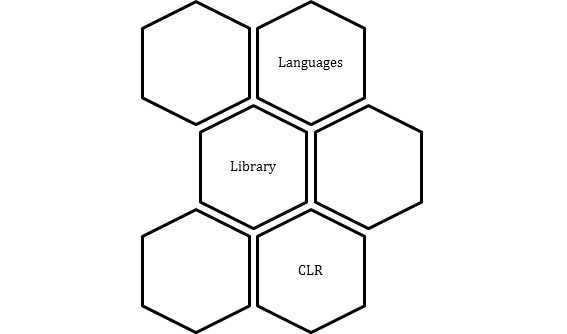

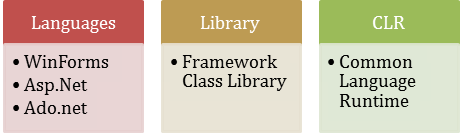
The basic architecture of .Net Framework looks like this as shown in the diagram that focuses on three elements majorly – Languages, Library, and CLR. Here, are some of the benefits of the platform that you should consider before you start working on the same.

  • This is a popular platform for application developers.
  • The platform supports multiple languages and cross-language integration too.
  • There is one IDE that makes the development work easier than you think of.
  • With a wider set of utilities, Framework acts as the building block for the application system.
  • There is one GUI to make the things more appealing.
  • Microsoft .net Framework is an independent framework with the middle-level interface.
  • It enhances interoperability across language with CTS (Common Type System).
  • There is one CLR (Common Language Runtime) that is responsible to maintain or execute multiple applications that are developed using the .net library.
  • The framework is primarily consisting of a gigantic library of code.

In the next section, we will discuss on each of the components one by one in detail.

Read: C# Interview Questions and Answers

What are the .Net Components?

The .net architecture has the following key components that you should know in detail – The .Net framework is not a new name but heard by almost everyone who wanted to start a career in the IT domain. The framework was started by the Microsoft in the year 2002. The objective of designing this framework was to create more robust and safe applications based on the Windows platform.  The initial version of the .net framework was 1.0 and it has come a long way since then. It can be used to create both web-based or form-based apps. It gives wonderful support to a plenty of programming languages like VB (Visual Basics), C# and more. So, developers have the flexibility to choose anyone based on his skills set and knowledge.  This blog is dedicated to the basics of the .net framework and why it is suitable for beginners as well. The topics to be covered in the blog include – 1.	The Architecture of .Net Framework 2.	What are the .Net Components? 3.	Design Principles for the .Net Framework Let us discuss on each of the topics one by one to gain more meaningful insights on the topic What is Microsoft .Net Framework and its architecture. The Architecture of .Net Framework   The basic architecture of .Net Framework looks like this as shown in the diagram that focuses on three elements majorly – Languages, Library, and CLR. Here, are some of the benefits of the platform that you should consider before you start working on the same. ●	This is a popular platform for application developers. ●	The platform supports multiple languages and cross-language integration too. ●	There is one IDE that makes the development work easier than you think of. ●	With a wider set of utilities, Framework acts as the building block for the application system. ●	There is one GUI to make the things more appealing. ●	Microsoft .net Framework is an independent framework with the middle-level interface. ●	It enhances interoperability across language with CTS (Common Type System). ●	There is one CLR (Common Language Runtime) that is responsible to maintain or execute multiple applications that are developed using the .net library. ●	The framework is primarily consisting of a gigantic library of code. In the next section, we will discuss on each of the components one by one in detail. What are the .Net Components? The .net architecture has the following key components that you should know in detail –    1). CLR (Common Language Runtime) CLR is an important part of the .Net Architecture where most of the .net programs are executed. The major benefits of the CLR are listed below – A). Exceptional Handling Exceptions are the complicated errors that occur when the application is executed. For example, if you are trying to open some file on your local machine but this is not available there. The next example is when you try to fetch some records from the database but your connection is not valid and no longer available. B). Garbage Collection (GC) As the name suggests, this is the process of removing unwanted resources that are no longer needed by the application. One of the major features of GC is the managed code that makes sure that memory used by the application can be freed completely especially when particular resources are no longer in use.  Before the launch of .Net Framework, this was the responsibility of programmers to manage the memory and deleted unnecessary code that is not required anymore. If memory will not be managed properly that it could result in malfunctioning and it is not accepted by large applications at all. Also, it slows down the system performance and it ultimately leads to system crash in the end. GC works by inspecting the different memory elements and removes everything that is no longer required. Obviously, there is not a particular time frame to complete all this work because time span varies based on the size of application and waste resources too. In case, if there is some file that is no longer needed and finished all operations too then it would be deleted immediately. If the database connection is no longer needed and you have performed all queries too then you can remove the database connection too. C). Multiple Programming Languages As already mentioned, a developer can choose from a wide range of programming languages that suit his project and he know well how to use that particular programming language too. When you start working on some project, the first step is deciding on the right programming language, the most common choices here are VB and C#.   Further, there is one compiler that would be different for different programming languages. If you are using C# programming language for your project then there would be a C# compiler to complete the job. Similarly, for VB, you will be availed with the different compiler.  Next is the CLI (Common Language Interpreter) that is taken as the final layer in the .net Framework and helps to run any .net program successfully. Once the code is compiled, it will be sent to the CLI layer to run various .net apps. 2). Class Library The complete framework includes a large set of libraries that contain the complete collection of methods and functions and further used for core purpose too. These class library functions can be used to manage a plenty of file-level operations too. So, there are methods to read text on a file and similarly, there are methods to write the text on a file.  Sometimes, the methods are broken down into namespaces to perform certain operations. The broken methods are marked with the “*” sign along to make you sure that it falls the under the namespace category. Technically, Namespace is the logical separation of methods and they will be discussed in detail in later blogs. 3). Languages Here are the popular types of applications that can be built on the .Net framework are classified broadly into following categories – ●	WinForms: This is needed to design the web-based forms or form-based apps that could run over almost any user machine. The best example in this category is Notepad that comes under the client-based application category. ●	Asp.Net: This platform is used to design web-based apps and they could be run over almost any internet browser like Chrome, Internet Explorer (IE), or Firefox etc. This web application is further processed to a particular server where all internet related services are installed. IIS (Internet Information Server) is a popular Microsoft component that helps in executing asp.net applications quickly. Once the apps are executed, they are sent to the client machines further and the output will be displayed in the browser. ●	Ado.Net: ADO.Net – This technology is used to develop applications to interact with Databases such as Oracle or Microsoft SQL Server.  This is a technology that was proposed to design apps to interact with databases like Oracle, SQL server and more. Microsoft makes sure that .Net Framework is always in compliance with all supported Windows Operating systems.  Design Principles for the .Net Framework Here is the list of design principles for the .Net Framework that makes it the most suitable choice for creating robust applications.   1). Interoperability This framework offers a strong backward support. For example, if there is some application that was developed in the older version but you wanted to migrate the application in the newer version or the highest version for the .Net Framework then it could be done quickly. The best part is that the application will still work without any technical errors. Microsoft makes sure that older version gel with the latest versions in a matter of minutes only. 2). Portability Applications that are based on the .Net Framework can work almost anywhere on different Windows platforms. For the latest releases, Microsoft makes sure that .Net products could run over other platforms too like Linux, IOS, and more. 3). In-built Security Mechanism The framework has the wonderful security mechanism and it is an inbuilt process that helps to validate or verify the apps completely. Each application has the flexibility to define security mechanism explicitly to grant the user access to the code for all running programs. 4). Robust Memory Management This task is handled by CLR (Common Language Runtime) completely where garbage collectors make sure that not any unwanted resources are running over the server. The resources will be released automatically as soon as they are not in use anymore. This is not a one-time process but garbage collectors keep on checking from time to time and maintains memory health too completely. 5). Easy Deployments Yes, this is again an important feature that makes the .Net framework more suitable for large enterprise apps. There are a plenty of tools that can be used to make the deployment easier and faster. These tools or packages are distributed across the client machine and installed automatically whenever needed. Verdict: This is a popular programming language developed by the Microsoft and it was designed to build apps that could run over multiple Windows platforms. This is a popular language that can be used to develop Form-based apps, web-based apps, or powerful web services too.  Further, developers had the flexibility to choose from multiple programming languages based on the project needs and their skills set. To know more on What is .Net Framework and complete architectural details, join the .Net certification program at JanBask Training right away.

1). CLR (Common Language Runtime)

CLR is an important part of the .Net Architecture where most of the .net programs are executed. The major benefits of the CLR are listed below –

A). Exceptional Handling

Exceptions are the complicated errors that occur when the application is executed. For example, if you are trying to open some file on your local machine but this is not available there. The next example is when you try to fetch some records from the database but your connection is not valid and no longer available.

B). Garbage Collection (GC)

As the name suggests, this is the process of removing unwanted resources that are no longer needed by the application. One of the major features of GC is the managed code that makes sure that memory used by the application can be freed completely especially when particular resources are no longer in use.

Before the launch of .Net Framework, this was the responsibility of programmers to manage the memory and deleted unnecessary code that is not required anymore. If memory will not be managed properly that it could result in malfunctioning and it is not accepted by large applications at all. Also, it slows down the system performance and it ultimately leads to system crash in the end.

GC works by inspecting the different memory elements and removes everything that is no longer required. Obviously, there is not a particular time frame to complete all this work because time span varies based on the size of application and waste resources too. In case, if there is some file that is no longer needed and finished all operations too then it would be deleted immediately. If the database connection is no longer needed and you have performed all queries too then you can remove the database connection too.

C). Multiple Programming Languages

As already mentioned, a developer can choose from a wide range of programming languages that suit his project and he know well how to use that particular programming language too. When you start working on some project, the first step is deciding on the right programming language, the most common choices here are VB and C#. The .Net framework is not a new name but heard by almost everyone who wanted to start a career in the IT domain. The framework was started by the Microsoft in the year 2002. The objective of designing this framework was to create more robust and safe applications based on the Windows platform.  The initial version of the .net framework was 1.0 and it has come a long way since then. It can be used to create both web-based or form-based apps. It gives wonderful support to a plenty of programming languages like VB (Visual Basics), C# and more. So, developers have the flexibility to choose anyone based on his skills set and knowledge.  This blog is dedicated to the basics of the .net framework and why it is suitable for beginners as well. The topics to be covered in the blog include – 1.	The Architecture of .Net Framework 2.	What are the .Net Components? 3.	Design Principles for the .Net Framework Let us discuss on each of the topics one by one to gain more meaningful insights on the topic What is Microsoft .Net Framework and its architecture. The Architecture of .Net Framework   The basic architecture of .Net Framework looks like this as shown in the diagram that focuses on three elements majorly – Languages, Library, and CLR. Here, are some of the benefits of the platform that you should consider before you start working on the same. ●	This is a popular platform for application developers. ●	The platform supports multiple languages and cross-language integration too. ●	There is one IDE that makes the development work easier than you think of. ●	With a wider set of utilities, Framework acts as the building block for the application system. ●	There is one GUI to make the things more appealing. ●	Microsoft .net Framework is an independent framework with the middle-level interface. ●	It enhances interoperability across language with CTS (Common Type System). ●	There is one CLR (Common Language Runtime) that is responsible to maintain or execute multiple applications that are developed using the .net library. ●	The framework is primarily consisting of a gigantic library of code. In the next section, we will discuss on each of the components one by one in detail. What are the .Net Components? The .net architecture has the following key components that you should know in detail –    1). CLR (Common Language Runtime) CLR is an important part of the .Net Architecture where most of the .net programs are executed. The major benefits of the CLR are listed below – A). Exceptional Handling Exceptions are the complicated errors that occur when the application is executed. For example, if you are trying to open some file on your local machine but this is not available there. The next example is when you try to fetch some records from the database but your connection is not valid and no longer available. B). Garbage Collection (GC) As the name suggests, this is the process of removing unwanted resources that are no longer needed by the application. One of the major features of GC is the managed code that makes sure that memory used by the application can be freed completely especially when particular resources are no longer in use.  Before the launch of .Net Framework, this was the responsibility of programmers to manage the memory and deleted unnecessary code that is not required anymore. If memory will not be managed properly that it could result in malfunctioning and it is not accepted by large applications at all. Also, it slows down the system performance and it ultimately leads to system crash in the end. GC works by inspecting the different memory elements and removes everything that is no longer required. Obviously, there is not a particular time frame to complete all this work because time span varies based on the size of application and waste resources too. In case, if there is some file that is no longer needed and finished all operations too then it would be deleted immediately. If the database connection is no longer needed and you have performed all queries too then you can remove the database connection too. C). Multiple Programming Languages As already mentioned, a developer can choose from a wide range of programming languages that suit his project and he know well how to use that particular programming language too. When you start working on some project, the first step is deciding on the right programming language, the most common choices here are VB and C#.   Further, there is one compiler that would be different for different programming languages. If you are using C# programming language for your project then there would be a C# compiler to complete the job. Similarly, for VB, you will be availed with the different compiler.  Next is the CLI (Common Language Interpreter) that is taken as the final layer in the .net Framework and helps to run any .net program successfully. Once the code is compiled, it will be sent to the CLI layer to run various .net apps. 2). Class Library The complete framework includes a large set of libraries that contain the complete collection of methods and functions and further used for core purpose too. These class library functions can be used to manage a plenty of file-level operations too. So, there are methods to read text on a file and similarly, there are methods to write the text on a file.  Sometimes, the methods are broken down into namespaces to perform certain operations. The broken methods are marked with the “*” sign along to make you sure that it falls the under the namespace category. Technically, Namespace is the logical separation of methods and they will be discussed in detail in later blogs. 3). Languages Here are the popular types of applications that can be built on the .Net framework are classified broadly into following categories – ●	WinForms: This is needed to design the web-based forms or form-based apps that could run over almost any user machine. The best example in this category is Notepad that comes under the client-based application category. ●	Asp.Net: This platform is used to design web-based apps and they could be run over almost any internet browser like Chrome, Internet Explorer (IE), or Firefox etc. This web application is further processed to a particular server where all internet related services are installed. IIS (Internet Information Server) is a popular Microsoft component that helps in executing asp.net applications quickly. Once the apps are executed, they are sent to the client machines further and the output will be displayed in the browser. ●	Ado.Net: ADO.Net – This technology is used to develop applications to interact with Databases such as Oracle or Microsoft SQL Server.  This is a technology that was proposed to design apps to interact with databases like Oracle, SQL server and more. Microsoft makes sure that .Net Framework is always in compliance with all supported Windows Operating systems.  Design Principles for the .Net Framework Here is the list of design principles for the .Net Framework that makes it the most suitable choice for creating robust applications.   1). Interoperability This framework offers a strong backward support. For example, if there is some application that was developed in the older version but you wanted to migrate the application in the newer version or the highest version for the .Net Framework then it could be done quickly. The best part is that the application will still work without any technical errors. Microsoft makes sure that older version gel with the latest versions in a matter of minutes only. 2). Portability Applications that are based on the .Net Framework can work almost anywhere on different Windows platforms. For the latest releases, Microsoft makes sure that .Net products could run over other platforms too like Linux, IOS, and more. 3). In-built Security Mechanism The framework has the wonderful security mechanism and it is an inbuilt process that helps to validate or verify the apps completely. Each application has the flexibility to define security mechanism explicitly to grant the user access to the code for all running programs. 4). Robust Memory Management This task is handled by CLR (Common Language Runtime) completely where garbage collectors make sure that not any unwanted resources are running over the server. The resources will be released automatically as soon as they are not in use anymore. This is not a one-time process but garbage collectors keep on checking from time to time and maintains memory health too completely. 5). Easy Deployments Yes, this is again an important feature that makes the .Net framework more suitable for large enterprise apps. There are a plenty of tools that can be used to make the deployment easier and faster. These tools or packages are distributed across the client machine and installed automatically whenever needed. Verdict: This is a popular programming language developed by the Microsoft and it was designed to build apps that could run over multiple Windows platforms. This is a popular language that can be used to develop Form-based apps, web-based apps, or powerful web services too.  Further, developers had the flexibility to choose from multiple programming languages based on the project needs and their skills set. To know more on What is .Net Framework and complete architectural details, join the .Net certification program at JanBask Training right away. Further, there is one compiler that would be different for different programming languages. If you are using C# programming language for your project then there would be a C# compiler to complete the job. Similarly, for VB, you will be availed with the different compiler.

Read: What Are The Roles & Responsibility Of A .Net Developer

Next is the CLI (Common Language Interpreter) that is taken as the final layer in the .net Framework and helps to run any .net program successfully. Once the code is compiled, it will be sent to the CLI layer to run various .net apps.

2). Class Library

The complete framework includes a large set of libraries that contain the complete collection of methods and functions and further used for core purpose too. These class library functions can be used to manage a plenty of file-level operations too. So, there are methods to read text on a file and similarly, there are methods to write the text on a file.

Sometimes, the methods are broken down into namespaces to perform certain operations. The broken methods are marked with the “*” sign along to make you sure that it falls the under the namespace category. Technically, Namespace is the logical separation of methods and they will be discussed in detail in later blogs.

3). Languages

Here are the popular types of applications that can be built on the .Net framework are classified broadly into following categories –

  • WinForms: This is needed to design the web-based forms or form-based apps that could run over almost any user machine. The best example in this category is Notepad that comes under the client-based application category.
  • Net: This platform is used to design web-based apps and they could be run over almost any internet browser like Chrome, Internet Explorer (IE), or Firefox etc. This web application is further processed to a particular server where all internet related services are installed. IIS (Internet Information Server) is a popular Microsoft component that helps in executing asp.net applications quickly. Once the apps are executed, they are sent to the client machines further and the output will be displayed in the browser.
  • Net: ADO.Net – This technology is used to develop applications to interact with Databases such as Oracle or Microsoft SQL Server.

This is a technology that was proposed to design apps to interact with databases like Oracle, SQL server and more. Microsoft makes sure that .Net Framework is always in compliance with all supported Windows Operating systems.

Design Principles for the .Net Framework

Here is the list of design principles for the .Net Framework that makes it the most suitable choice for creating robust applications. The .Net framework is not a new name but heard by almost everyone who wanted to start a career in the IT domain. The framework was started by the Microsoft in the year 2002. The objective of designing this framework was to create more robust and safe applications based on the Windows platform.  The initial version of the .net framework was 1.0 and it has come a long way since then. It can be used to create both web-based or form-based apps. It gives wonderful support to a plenty of programming languages like VB (Visual Basics), C# and more. So, developers have the flexibility to choose anyone based on his skills set and knowledge.  This blog is dedicated to the basics of the .net framework and why it is suitable for beginners as well. The topics to be covered in the blog include – 1.	The Architecture of .Net Framework 2.	What are the .Net Components? 3.	Design Principles for the .Net Framework Let us discuss on each of the topics one by one to gain more meaningful insights on the topic What is Microsoft .Net Framework and its architecture. The Architecture of .Net Framework   The basic architecture of .Net Framework looks like this as shown in the diagram that focuses on three elements majorly – Languages, Library, and CLR. Here, are some of the benefits of the platform that you should consider before you start working on the same. ●	This is a popular platform for application developers. ●	The platform supports multiple languages and cross-language integration too. ●	There is one IDE that makes the development work easier than you think of. ●	With a wider set of utilities, Framework acts as the building block for the application system. ●	There is one GUI to make the things more appealing. ●	Microsoft .net Framework is an independent framework with the middle-level interface. ●	It enhances interoperability across language with CTS (Common Type System). ●	There is one CLR (Common Language Runtime) that is responsible to maintain or execute multiple applications that are developed using the .net library. ●	The framework is primarily consisting of a gigantic library of code. In the next section, we will discuss on each of the components one by one in detail. What are the .Net Components? The .net architecture has the following key components that you should know in detail –    1). CLR (Common Language Runtime) CLR is an important part of the .Net Architecture where most of the .net programs are executed. The major benefits of the CLR are listed below – A). Exceptional Handling Exceptions are the complicated errors that occur when the application is executed. For example, if you are trying to open some file on your local machine but this is not available there. The next example is when you try to fetch some records from the database but your connection is not valid and no longer available. B). Garbage Collection (GC) As the name suggests, this is the process of removing unwanted resources that are no longer needed by the application. One of the major features of GC is the managed code that makes sure that memory used by the application can be freed completely especially when particular resources are no longer in use.  Before the launch of .Net Framework, this was the responsibility of programmers to manage the memory and deleted unnecessary code that is not required anymore. If memory will not be managed properly that it could result in malfunctioning and it is not accepted by large applications at all. Also, it slows down the system performance and it ultimately leads to system crash in the end. GC works by inspecting the different memory elements and removes everything that is no longer required. Obviously, there is not a particular time frame to complete all this work because time span varies based on the size of application and waste resources too. In case, if there is some file that is no longer needed and finished all operations too then it would be deleted immediately. If the database connection is no longer needed and you have performed all queries too then you can remove the database connection too. C). Multiple Programming Languages As already mentioned, a developer can choose from a wide range of programming languages that suit his project and he know well how to use that particular programming language too. When you start working on some project, the first step is deciding on the right programming language, the most common choices here are VB and C#.   Further, there is one compiler that would be different for different programming languages. If you are using C# programming language for your project then there would be a C# compiler to complete the job. Similarly, for VB, you will be availed with the different compiler.  Next is the CLI (Common Language Interpreter) that is taken as the final layer in the .net Framework and helps to run any .net program successfully. Once the code is compiled, it will be sent to the CLI layer to run various .net apps. 2). Class Library The complete framework includes a large set of libraries that contain the complete collection of methods and functions and further used for core purpose too. These class library functions can be used to manage a plenty of file-level operations too. So, there are methods to read text on a file and similarly, there are methods to write the text on a file.  Sometimes, the methods are broken down into namespaces to perform certain operations. The broken methods are marked with the “*” sign along to make you sure that it falls the under the namespace category. Technically, Namespace is the logical separation of methods and they will be discussed in detail in later blogs. 3). Languages Here are the popular types of applications that can be built on the .Net framework are classified broadly into following categories – ●	WinForms: This is needed to design the web-based forms or form-based apps that could run over almost any user machine. The best example in this category is Notepad that comes under the client-based application category. ●	Asp.Net: This platform is used to design web-based apps and they could be run over almost any internet browser like Chrome, Internet Explorer (IE), or Firefox etc. This web application is further processed to a particular server where all internet related services are installed. IIS (Internet Information Server) is a popular Microsoft component that helps in executing asp.net applications quickly. Once the apps are executed, they are sent to the client machines further and the output will be displayed in the browser. ●	Ado.Net: ADO.Net – This technology is used to develop applications to interact with Databases such as Oracle or Microsoft SQL Server.  This is a technology that was proposed to design apps to interact with databases like Oracle, SQL server and more. Microsoft makes sure that .Net Framework is always in compliance with all supported Windows Operating systems.  Design Principles for the .Net Framework Here is the list of design principles for the .Net Framework that makes it the most suitable choice for creating robust applications.   1). Interoperability This framework offers a strong backward support. For example, if there is some application that was developed in the older version but you wanted to migrate the application in the newer version or the highest version for the .Net Framework then it could be done quickly. The best part is that the application will still work without any technical errors. Microsoft makes sure that older version gel with the latest versions in a matter of minutes only. 2). Portability Applications that are based on the .Net Framework can work almost anywhere on different Windows platforms. For the latest releases, Microsoft makes sure that .Net products could run over other platforms too like Linux, IOS, and more. 3). In-built Security Mechanism The framework has the wonderful security mechanism and it is an inbuilt process that helps to validate or verify the apps completely. Each application has the flexibility to define security mechanism explicitly to grant the user access to the code for all running programs. 4). Robust Memory Management This task is handled by CLR (Common Language Runtime) completely where garbage collectors make sure that not any unwanted resources are running over the server. The resources will be released automatically as soon as they are not in use anymore. This is not a one-time process but garbage collectors keep on checking from time to time and maintains memory health too completely. 5). Easy Deployments Yes, this is again an important feature that makes the .Net framework more suitable for large enterprise apps. There are a plenty of tools that can be used to make the deployment easier and faster. These tools or packages are distributed across the client machine and installed automatically whenever needed. Verdict: This is a popular programming language developed by the Microsoft and it was designed to build apps that could run over multiple Windows platforms. This is a popular language that can be used to develop Form-based apps, web-based apps, or powerful web services too.  Further, developers had the flexibility to choose from multiple programming languages based on the project needs and their skills set. To know more on What is .Net Framework and complete architectural details, join the .Net certification program at JanBask Training right away.

1). Interoperability

This framework offers a strong backward support. For example, if there is some application that was developed in the older version but you wanted to migrate the application in the newer version or the highest version for the .Net Framework then it could be done quickly. The best part is that the application will still work without any technical errors. Microsoft makes sure that older version gel with the latest versions in a matter of minutes only.

Read: Top 30 Advanced Microsoft Power BI Interview Questions & Answers

2). Portability

Applications that are based on the .Net Framework can work almost anywhere on different Windows platforms. For the latest releases, Microsoft makes sure that .Net products could run over other platforms too like Linux, IOS, and more.

3). In-built Security Mechanism

The framework has the wonderful security mechanism and it is an inbuilt process that helps to validate or verify the apps completely. Each application has the flexibility to define security mechanism explicitly to grant the user access to the code for all running programs.

4). Robust Memory Management

This task is handled by CLR (Common Language Runtime) completely where garbage collectors make sure that not any unwanted resources are running over the server. The resources will be released automatically as soon as they are not in use anymore. This is not a one-time process but garbage collectors keep on checking from time to time and maintains memory health too completely.

5). Easy Deployments

Yes, this is again an important feature that makes the .Net framework more suitable for large enterprise apps. There are a plenty of tools that can be used to make the deployment easier and faster. These tools or packages are distributed across the client machine and installed automatically whenever needed.

Verdict: This is a popular programming language developed by the Microsoft and it was designed to build apps that could run over multiple Windows platforms. This is a popular language that can be used to develop Form-based apps, web-based apps, or powerful web services too.

Further, developers had the flexibility to choose from multiple programming languages based on the project needs and their skills set. To know more on What is .Net Framework and complete architectural details, join the .Net certification program at JanBask Training right away.

Read: Microsoft .Net Software Developer Salary in USA


fbicons FaceBook twitterTwitter lingedinLinkedIn pinterest Pinterest emailEmail

     Logo

    JanBask Training Team

    The JanBask Training Team includes certified professionals and expert writers dedicated to helping learners navigate their career journeys in QA, Cybersecurity, Salesforce, and more. Each article is carefully researched and reviewed to ensure quality and relevance.


Comments

Trending Courses

Gen AI Course

Gen AI

  • Introduction to Generative Models
  • Generative Adversarial Networks (GANs)
  • The Art and Science of Prompt Engineering
  • MLOps: Deploying Generative AI Models
Gen AI Course

Upcoming Class

-0 day 14 Jul 2026

Agentic AI Course

Agentic AI

  • Introduction to Agentic AI
  • Multi-Agent Setup with LangGraph Context Handling in Graphs
  • Performance Benchmarking Advanced Prompt Engineering for Agents
  • Agent Behavior Tuning Project and Mock Session
Agentic AI Course

Upcoming Class

10 days 24 Jul 2026

AI in Automation Testing Course

AI in Automation Testing

  • Intro to AI & ML in Automation
  • Playwright + JS (JavaScript) + API Tesng
  • Automaon with Using ChatGPT & Playwright MCP server
  • GitHub Copilot, AI Tools & Interview preparation
AI in Automation Testing Course

Upcoming Class

3 days 17 Jul 2026

Cyber Security Course

Cyber Security

  • Introduction to cybersecurity
  • Cryptography and Secure Communication 
  • Cloud Computing Architectural Framework
  • Security Architectures and Models
Cyber Security Course

Upcoming Class

-0 day 14 Jul 2026

Data Science Course

Data Science

  • Data Science Introduction
  • Hadoop and Spark Overview
  • Python & Intro to R Programming
  • Machine Learning
Data Science Course

Upcoming Class

3 days 17 Jul 2026

QA Course

QA

  • Introduction and Software Testing
  • Software Test Life Cycle
  • Automation Testing and API Testing
  • Selenium framework development using Testing
QA Course

Upcoming Class

4 days 18 Jul 2026

Salesforce Service Cloud Course

Salesforce Service Cloud

  • Industry Knowledge Introduction
  • Adoption and Maintenance
  • Interaction Channels Introduction
  • Integration and Data Management
Salesforce Service Cloud Course

Upcoming Class

31 days 14 Aug 2026

AWS Course

AWS

  • AWS & Fundamentals of Linux
  • Amazon Simple Storage Service
  • Elastic Compute Cloud
  • Databases Overview & Amazon Route 53
AWS Course

Upcoming Class

4 days 18 Jul 2026

Search Posts

Reset

Receive Latest Materials and Offers on Dotnet Course

Interviews